1866
The Mystery of the Monster
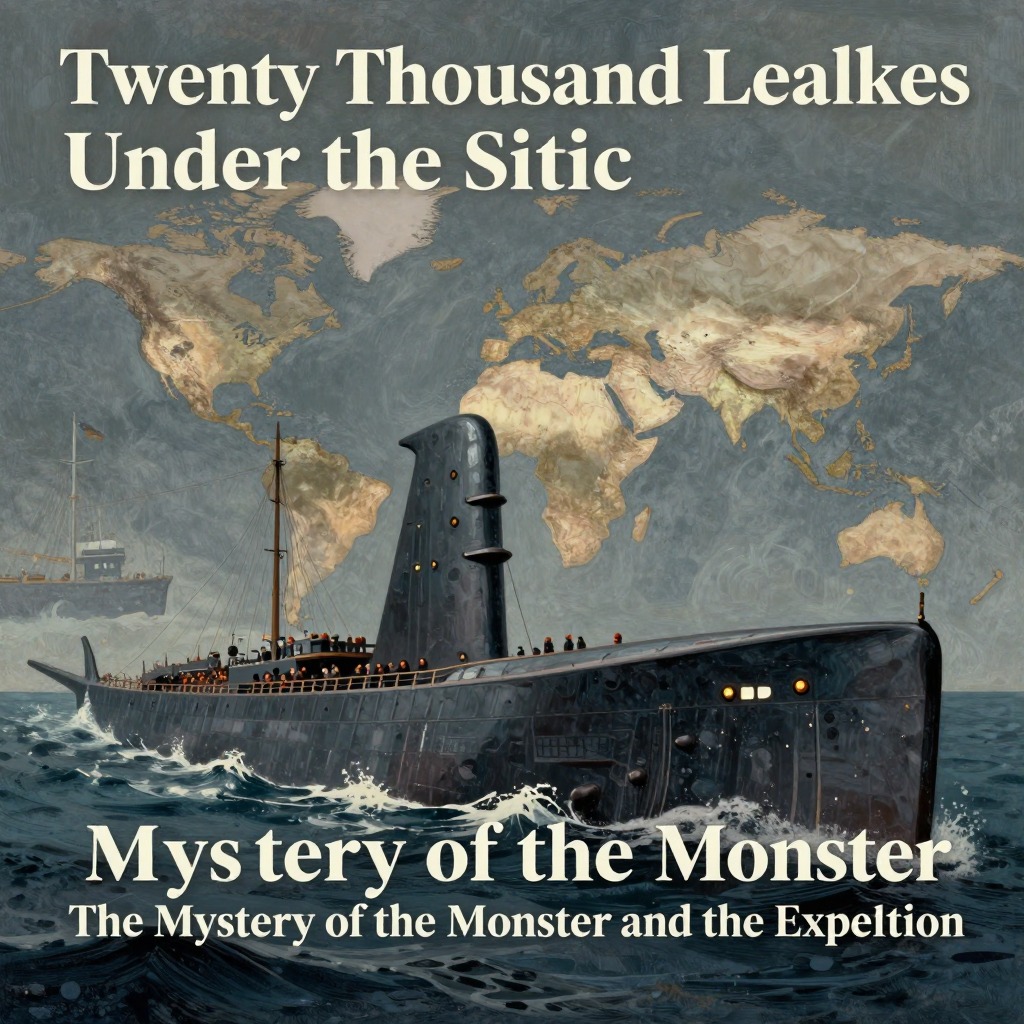
In 1866, several ships encounter an enormous, fast, spindle-shaped object at sea, sometimes phosphorescent. The phenomenon causes widespread alarm among seamen and the public. Reports from the Governor Higginson, Christopher Columbus, Helvetia, and Shannon describe a creature of unprecedented size and speed. The monster question inflames minds, with debates between believers and skeptics in scholarly societies and the press. The mystery deepens when the steamer Moravian and the Cunard liner Scotia are damaged by collisions with an unknown, hard object, leaving a perfectly triangular gash in the Scotia's hull. The public demands the seas be purged of this fearsome cetacean.
late March to early May 1867
Professor Aronnax Joins the Expedition
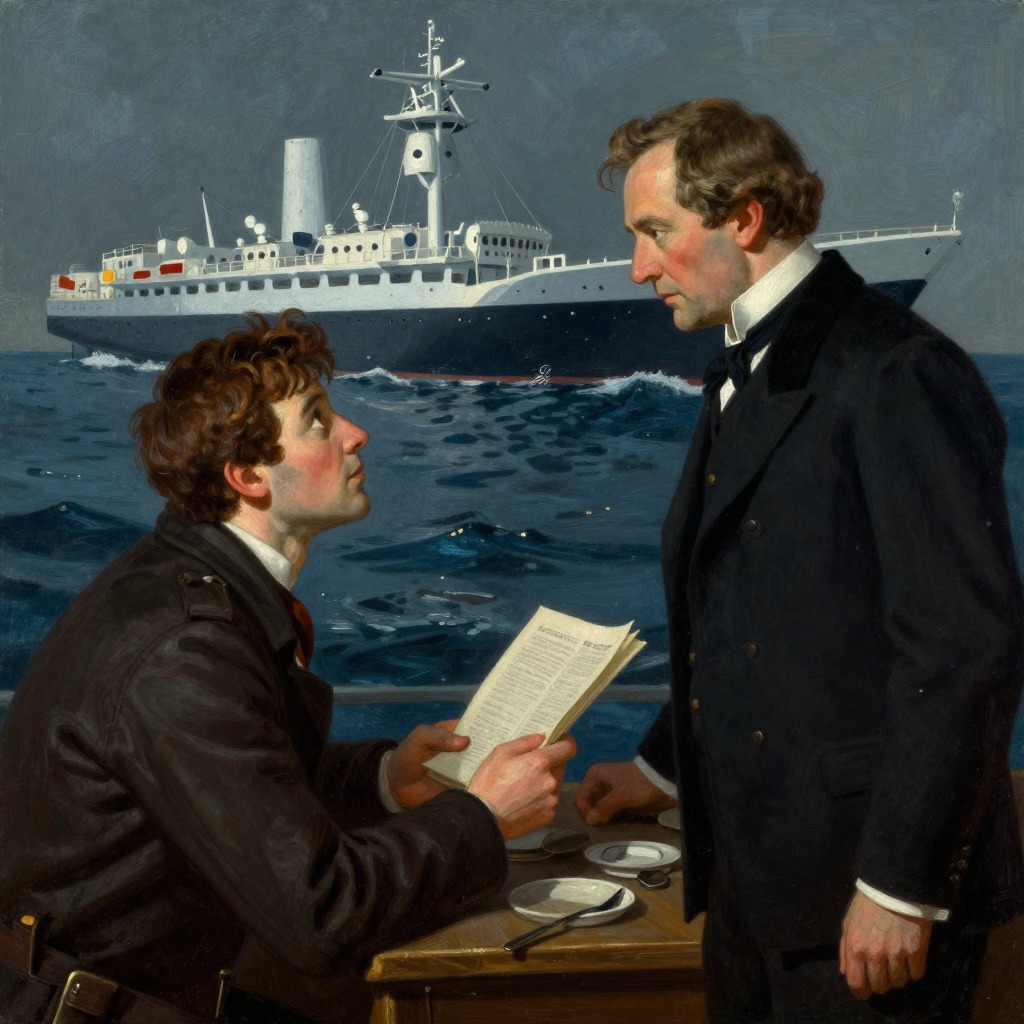
Professor Pierre Aronnax, a French naturalist and assistant professor at the Paris Museum of Natural History, returns to New York from a scientific expedition in Nebraska. He is caught up in the public excitement over the monster. The New York Herald asks for his views, and he publishes an article suggesting the creature is a giant narwhale with a powerful tusk. The U.S. government fits out a high-speed frigate, the Abraham Lincoln, under Commander Farragut to hunt the monster. Aronnax receives a letter from Secretary of the Navy J. B. Hobson, inviting him to join the expedition as France's representative. He accepts, summoning his loyal manservant Conseil, who stoically agrees to accompany him.
early June 1867
The Abraham Lincoln Sets Sail
Aronnax and Conseil board the Abraham Lincoln in Brooklyn. The frigate is a high-speed vessel, perfectly fitted for the hunt. Commander Farragut is a determined man who believes utterly in the monster. The ship is armed with harpoons, guns, and a powerful cannon. The crew is eager and a $2,000 reward is offered for the first sighting. The most notable addition to the crew is Ned Land, a Canadian harpooner of legendary skill. The frigate departs amid great fanfare, heading south to round Cape Horn and enter the Pacific, where the monster was last sighted.
July to November 1867
The Long and Fruitless Hunt
The Abraham Lincoln crosses the Atlantic, rounds Cape Horn, and enters the Pacific. For three months, the crew searches tirelessly, their eyes glued to the horizon. The initial enthusiasm turns to discouragement and then to fury as they find nothing. The crew becomes mutinous, and Farragut is forced to promise a three-day grace period. On the evening of November 4, the deadline approaches with no sign of the monster. Aronnax and Conseil discuss their failure, resigned to returning home. The atmosphere on the frigate is one of bitter disappointment.
evening of November 5, 1867
The Monster is Sighted
On the final evening of the grace period, as the Abraham Lincoln is about to give up, Ned Land's sharp eyes spot a strange glow in the water. The sea is lit from underneath by an intense, electric light. The object, a long blackish mass, moves with incredible speed and intelligence, circling the frigate and playing with it. The crew is stunned and terrified. Farragut, realizing he faces an unknown and powerful creature, decides to wait for daylight before attacking. The monster's electric glow and its strange, hissing breaths keep the entire crew on alert through the night.
November 6, 1867
The Chase and Collision
At daybreak, the monster is clearly visible as a long, metallic-looking object. The Abraham Lincoln gives chase, but the creature is faster. Farragut orders full steam, but the monster matches their speed. A cannon shot bounces harmlessly off its hide. The chase continues all day. As night falls, the monster appears motionless. Farragut sees an opportunity and approaches silently. Ned Land, perched on the bowsprit, hurls his harpoon. It strikes with a resonant clang, as if hitting solid metal. The monster's electric light goes out, and two enormous waterspouts crash onto the frigate's deck, sweeping Aronnax overboard into the sea.
night of November 6-7, 1867
Aronnax, Conseil, and Ned Land are Saved
Aronnax is thrown into the sea and struggles to stay afloat. He is rescued by Conseil, who has jumped in after him. They realize the frigate's propeller and rudder are smashed, leaving them adrift. They take turns towing each other through the night. Near dawn, they are joined by Ned Land, who has landed on what he thought was a floating islet. Ned reveals the truth: the 'monster' is a steel-plated submarine. They are clinging to the back of the Nautilus. The submarine begins to move, and they are eventually taken aboard by eight masked, silent men.
November 7-8, 1867
The First Meeting with Captain Nemo
Aronnax, Conseil, and Ned Land are imprisoned in a dark cell on the Nautilus. They are fed and then fall asleep. When they wake, the cell is lit by an electric light. Two men enter, one of whom is the ship's commander, Captain Nemo. He speaks to them in perfect French, revealing he knows their identities. He explains that their discovery of his secret forces him to keep them on board permanently. He offers them a conditional freedom: they can move about the ship but must obey when confined to their cabins during certain events. Nemo declares himself outside human society and its laws. He invites Aronnax to be his companion on an underwater tour of the world.
November 8, 1867
Exploring the Nautilus
Captain Nemo shows Aronnax the wonders of the Nautilus. They visit a vast library of 12,000 volumes, a smoking room with seaweed cigars, and a magnificent lounge filled with priceless art and natural history collections. Nemo explains that the ship is powered by a powerful, obedient force: electricity, which he extracts from the sea using sodium. He describes the ship's construction, its dimensions, and its ability to dive and maneuver using ballast tanks and horizontal fins. Aronnax is astounded by the ship's technology and the captain's genius. Nemo reveals the ship cost a fortune and that he is infinitely rich.
November 8, 1867
The Voyage Begins: The Black Current
Captain Nemo determines the Nautilus's position: 300 miles from Japan. He sets a course east-northeast at a depth of fifty meters, beginning their underwater tour. Aronnax is left alone to study the ship's charts. The Nautilus enters the Kuroshio, or Black Current. The lounge panels open, revealing the sea outside, brilliantly lit by the ship's electric light. Aronnax, Conseil, and Ned Land are mesmerized by the parade of exotic fish swimming past the windows. The sight temporarily distracts even the homesick Ned Land, who begins to identify the fish with Conseil classifying them.
November 16, 1867
The Invitation to Hunt
After several days without seeing Captain Nemo, Aronnax receives a written invitation to a hunting trip in the forests of Crespo Island. Ned Land is excited at the prospect of fresh meat. Aronnax is puzzled, as Nemo has renounced the land. Nemo explains that his forests are underwater. He equips Aronnax with a Rouquayrol-Denayrouze diving suit, a Ruhmkorff lamp, and a special electric rifle that fires glass bullets charged with high-voltage electricity. The hunting party, including Nemo, a crewman, Conseil, and Aronnax, prepares to descend to the ocean floor.
November 17, 1867
The Underwater Forest
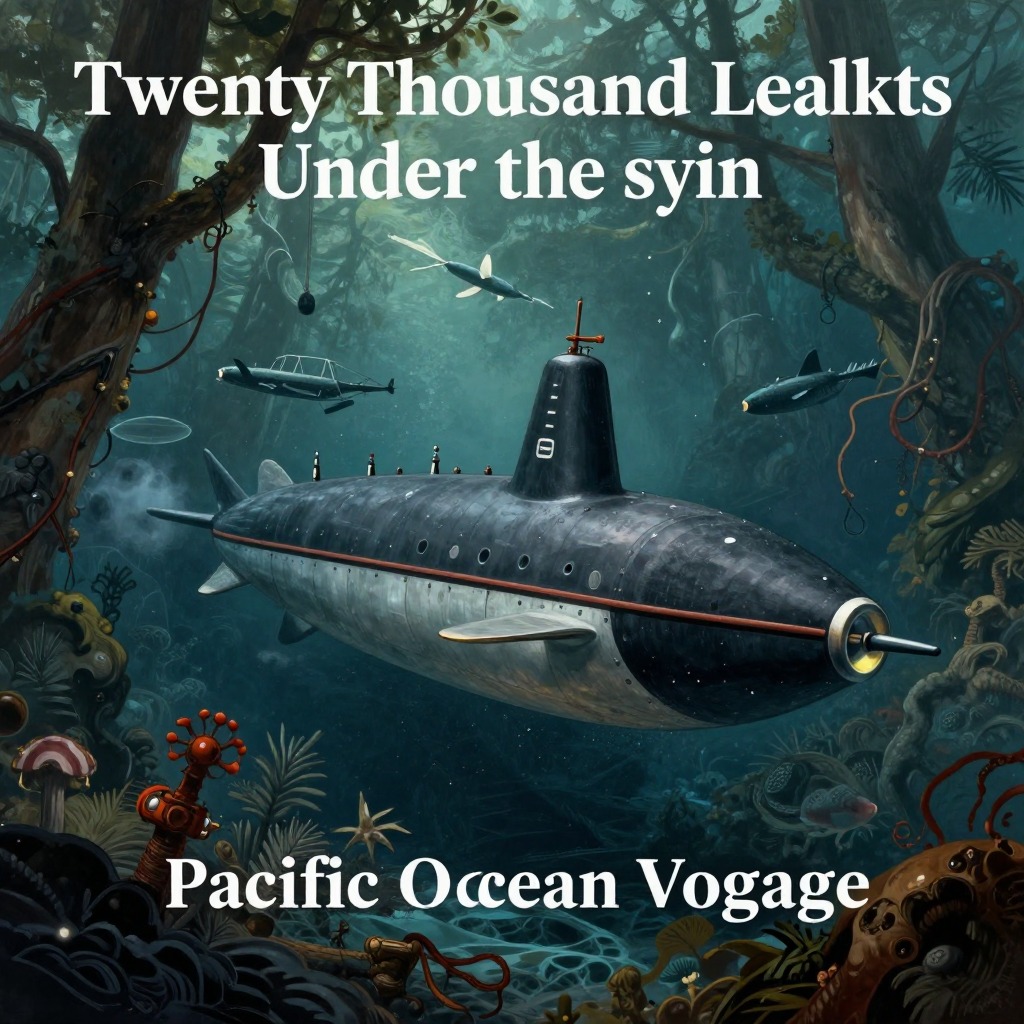
The hunting party steps onto the seafloor, thirty feet down. The sunlight penetrates the water, illuminating a world of dazzling color. They walk across fine sand, past rocks carpeted with zoophytes and flowers. The underwater forest is a realm of vertical plants, stiff and motionless. They see giant sea spiders, and Nemo kills one with his rifle butt. They descend into a deep valley, using their Ruhmkorff lamps in the increasing darkness. The excursion ends at the base of a cliff, the underpinning of Crespo Island. On the return journey, Nemo shoots a magnificent sea otter and an albatross.
December 27, 1867
The Nautilus at Vanikoro
The Nautilus reaches the island of Vanikoro, the site of the shipwreck of the French explorer La Pérouse. Captain Nemo, who has been absent for a week, appears and guides the ship to the exact location of the wreck. Through the lounge windows, Aronnax sees the coral-encrusted remains of the ships Compass and Astrolabe. Nemo reveals he possesses a tin box containing the actual military orders given to La Pérouse by King Louis XVI, found at the final shipwreck site. He tells the full story of La Pérouse's fate, ending with the crew's final demise on the Solomon Islands.
January 4, 1868
The Torres Strait Grounding
The Nautilus enters the dangerous Torres Strait, a narrow passageway between Australia and Papua New Guinea. Despite Nemo's careful navigation, the ship runs aground on a coral reef at high tide. The Nautilus is stuck, listing slightly. Nemo remains calm, explaining it is merely an 'incident' and that he will wait for the spring tide in five days to float the ship off. Ned Land sees this as an opportunity for escape, but Aronnax advises patience. Nemo grants permission for the three men to go ashore on the nearby island of Gueboroa.
January 5-6, 1868
Days Ashore on Gueboroa Island
Aronnax, Conseil, and Ned Land go ashore on Gueboroa Island. They explore the lush tropical forest, gathering coconuts, breadfruit, mangoes, and sago. Ned Land is delighted to hunt and kill a wild pig and several kangaroos. Conseil captures a magnificent, drunken bird of paradise. They feast on their finds. However, their idyll is interrupted when they are attacked by a group of Papuan natives. They retreat to the skiff and return to the Nautilus, which is still aground. The natives surround the ship, but Nemo is unconcerned.
January 8, 1868
The Electrified Hatches
The Papuan natives, numbering in the hundreds, surround the Nautilus in their dugout canoes. They attack with arrows and stones. Nemo, confident in his ship's defenses, simply closes the hatches. When the natives try to board by climbing the companionway, they are violently thrown back by an invisible force. The ship's metal railing is charged with electricity. The natives are terrified and retreat. At the exact moment of the spring tide, the Nautilus lifts off the coral bed and safely exits the Torres Strait, leaving the bewildered Papuans behind.
January 19-20, 1868
The Coral Funeral
After a mysterious incident where the Nautilus is involved in a collision, Aronnax is called to treat a mortally wounded crewman. The man dies from a severe head injury. Nemo, deeply moved, invites Aronnax and his companions on an underwater excursion. They are led to a beautiful, peaceful clearing in a coral forest. There, the crewmen dig a grave in the limestone floor. The dead crewman, wrapped in a white cloth, is lowered into the watery grave. Nemo and his men kneel in prayer. Nemo explains that this is their cemetery, safe from sharks and men, hundreds of feet beneath the waves.
January 28-29, 1868
The Pearl of Ceylon
The Nautilus arrives off the coast of Ceylon, famous for its pearl fisheries. Nemo invites Aronnax, Conseil, and Ned Land to visit the oysterbank. They don diving suits and walk along the seafloor. Nemo leads them to a hidden cave containing a giant clam. Inside the clam is a pearl the size of a coconut, worth an estimated ten million francs. Nemo has been cultivating it. As they leave, they witness a poor Indian diver being attacked by a giant shark. Nemo bravely fights the shark with a dagger, and Ned Land kills it with his harpoon. Nemo saves the diver and gives him a bag of pearls.
February 10, 1868
The Arabian Tunnel
The Nautilus enters the Red Sea. Nemo reveals to Aronnax his discovery of an underwater passageway connecting the Red Sea to the Mediterranean, which he calls the Arabian Tunnel. He explains how he deduced its existence by observing the migration of fish. The Nautilus dives and enters the tunnel, a dark, narrow gallery. The ship is swept along by a powerful current. In less than twenty minutes, they emerge into the Mediterranean. Ned Land is astonished and grudgingly admits Nemo is a superman. The passage opens up a new, faster route for their voyage.
February 14, 1868
The Greek Islands and the Gold Delivery
The Nautilus cruises through the Greek Islands. Aronnax observes a diver approaching the ship, who communicates with Nemo. Later, Nemo opens a safe containing gold ingots and fills a chest with them. The chest is loaded into the skiff and taken away. Aronnax realizes Nemo is secretly delivering millions to support the Cretan rebellion against Turkish rule. This act reveals a philanthropic side to the captain, contradicting his misanthropic exterior. The Nautilus then passes near the volcanic island of Santorini, where Nemo shows Aronnax an underwater volcanic eruption, demonstrating the earth's ongoing creation.
February 16-18, 1868
The Mediterranean in Forty-Eight Hours
The Nautilus races through the Mediterranean at high speed, covering 600 leagues in two days. Nemo avoids the surface, staying submerged to evade the many ships. The speed prevents any escape attempt by Ned Land. Aronnax and Conseil observe the fish of the Mediterranean through the lounge windows, including lampreys, rays, tuna, and sturgeon. The ship passes through the Strait of Sicily, where the seafloor is shallow, and then descends into the deeper western basin. They witness the wrecks of many ships on the seafloor, a graveyard of maritime disasters. The Nautilus finally exits the Mediterranean through the Strait of Gibraltar.
February 18, 1868
The Treasure of Vigo Bay
Emerging into the Atlantic, the Nautilus heads for the coast of Spain. Nemo, interrupting an escape plan by Ned Land, tells Aronnax the story of the Battle of Vigo Bay in 1702, where Spanish galleons were scuttled with their treasure. The Nautilus descends to the seafloor, and through the windows, Aronnax sees the wreckage of the galleons. Nemo's crew is busy collecting ingots of gold and silver. Nemo reveals he uses this treasure to fund his secret operations and to help oppressed peoples. He is not a selfish hoarder but a philanthropist, using the sea's wealth for a greater purpose.
February 19, 1868
The Lost Continent of Atlantis
The Nautilus continues south. Nemo invites Aronnax on a nighttime underwater excursion. They walk for hours, guided by a distant red glow. They climb a mountain, and from its peak, Aronnax sees a breathtaking sight: a vast, ruined city, with temples, palaces, and an aqueduct, all lit by the lava from an underwater volcano. Nemo writes the word 'ATLANTIS' on a rock. Aronnax realizes he is standing on the legendary lost continent. The experience is overwhelming, a glimpse into a prehistoric world. Nemo seems to draw strength and solitude from this place, a kingdom of the past that belongs only to him.
February 20-21, 1868
The Underwater Coalfields
The Nautilus enters a hidden, extinct volcano, which serves as its secret harbor. Inside is a vast, calm lagoon. Nemo explains that this is where his men mine the coal needed to produce the sodium for his batteries. The volcano's crater provides air and light. Aronnax, Conseil, and Ned Land explore the interior, climbing the slopes. They find a beehive, and Ned collects honey. They also see birds and bustards. The cave is a self-contained world. After loading a supply of sodium, the Nautilus departs, leaving this secret sanctuary behind.
February 22, 1868
The Sargasso Sea
The Nautilus enters the Sargasso Sea, a vast, calm area in the middle of the Atlantic covered with a dense carpet of seaweed and gulfweed. Nemo keeps the ship just below the surface to avoid entangling the propeller. Aronnax observes the unique ecosystem, with its floating debris and specialized marine life. The sea is a graveyard of wreckage from all over the world. The Nautilus then resumes its southward course at high speed, heading for the Antarctic. For nineteen days, the voyage is uneventful, and Aronnax sees little of Nemo, who seems lost in thought.
March 14, 1868
The Battle with Sperm Whales
The Nautilus encounters a herd of baleen whales. Ned Land is eager to hunt them, but Nemo forbids it, calling it a 'murderous pastime.' Instead, Nemo points out a herd of sperm whales, which he describes as cruel and destructive. He decides to attack them with the Nautilus's spur. The ship becomes a fearsome weapon, charging into the sperm whales, skewering them, and tearing them apart. The sea turns red with blood. Ned Land is horrified, calling it 'butchery' rather than hunting. Nemo defends his actions as a necessary slaughter of destructive animals. The battle ends with the sperm whales defeated.
March 16-19, 1868
The Journey to the South Pole
The Nautilus pushes south, encountering the Ice Bank. Nemo announces his intention to reach the South Pole by diving under the ice. Ned Land thinks it is madness. The Nautilus submerges and navigates under the frozen ceiling for days, searching for a way up. The ship is trapped when the ice closes in behind them. They are imprisoned in a tunnel of ice. Nemo uses boiling water to slow the freezing and the crew works tirelessly to dig a trench. After days of exhausting labor and with the air running out, Nemo uses the ship's weight to crack the remaining ice. The Nautilus breaks through to the open sea at the South Pole.
March 21, 1868
Claiming the South Pole
The Nautilus surfaces in an open sea at the South Pole. Nemo, Aronnax, and Conseil go ashore on a volcanic islet. Nemo takes a noon sighting of the sun, which confirms they are at the exact geographic pole. He unfurls a black flag with a gold 'N' and claims the entire Antarctic continent in his own name. He gives a farewell speech to the sun, which will set for six months of polar night. Aronnax is awed by the achievement but also disturbed by Nemo's hubris. The captain's claim is a declaration of independence from the entire human world.
March 22-28, 1868
The Imprisonment in the Ice
The Nautilus begins its return journey north, but a massive iceberg overturns and traps the ship in a narrow tunnel of ice. The walls are closing in, and the air is running out. The crew works desperately to dig a trench to free the ship. The situation becomes critical as the oxygen supply dwindles. Aronnax, Conseil, and Ned Land suffer from asphyxiation. Ned and Conseil sacrifice their last air for Aronnax. In a final, desperate gamble, Nemo fills the ballast tanks, and the Nautilus's weight cracks the ice ceiling. The ship bursts through to the surface, and the hatches are opened to life-giving air.
April 20, 1868
The Battle with the Giant Squid
The Nautilus is cruising in the Atlantic near the Bahamas when its propeller is jammed by the mandibles of a giant squid. Nemo decides to fight the creatures on the surface. The crew, armed with axes, and Aronnax, Conseil, and Ned Land with harpoons, engage in a desperate battle on the platform. A giant squid seizes a crewman, a Frenchman, and drags him under. Nemo, in a rage, attacks the squid, and Ned Land kills it. The battle is horrific, and Nemo is deeply grieved by the loss of his companion. The event reveals that there are other Frenchmen on board and underscores the constant danger of their underwater existence.
May 13, 1868
The Storm in the Gulf Stream
The Nautilus enters the Gulf Stream and is caught in a violent hurricane. Nemo, in a reckless mood, decides to brave the storm on the surface rather than dive to safety. Aronnax, lashed to the platform, watches in awe as Nemo faces the elements. The ship is battered by enormous waves and lightning. The storm is a terrifying display of nature's power. Nemo seems to court death, standing defiantly against the tempest. Finally, he orders the ship to submerge, finding peace and silence just fifty meters below the raging surface. The storm passes, and the Nautilus continues its journey.
June 1-2, 1868
The Sinking of the Warship
The Nautilus is pursued by an unknown warship. Nemo, filled with a terrible, implacable hate, decides to sink it. He reveals that the ship is from a nation he despises, the same one that destroyed his family. Aronnax, Ned, and Conseil attempt to escape but are too late. The Nautilus submerges and rams the warship below its waterline, piercing its hull like a needle through canvas. Aronnax watches in horror as the ship sinks with all hands. Nemo, after the massacre, retreats to his stateroom and weeps before a portrait of his wife and children. The act of vengeance leaves him broken.
late June 1868
The Final Escape and the Maelstrom
In the aftermath of the sinking, the Nautilus flees north, seemingly without direction. The atmosphere on board is one of despair and madness. Ned Land, at the end of his patience, plans a final escape. They sight land near the Lofoten Islands. As they prepare to launch the skiff, the crew begins shouting 'Maelstrom!' The Nautilus is caught in the powerful whirlpool off the coast of Norway. The skiff is torn from its moorings and hurled into the vortex. Aronnax is struck on the head and loses consciousness.
after the Maelstrom
The Conclusion
Aronnax, Conseil, and Ned Land regain consciousness in a fisherman's hut on the Lofoten Islands. They are safe, but the fate of the Nautilus and Captain Nemo is unknown. Aronnax reflects on the ten-month, 20,000-league voyage. He wonders if Nemo survived the Maelstrom, if his hate has been appeased, and if the manuscript containing his life story will ever be found. The professor has completed his narrative, a faithful record of an inconceivable expedition. He concludes that two men, Captain Nemo and himself, have earned the right to answer the ancient question: 'Who can fathom the soundless depths?'